Showing posts with label 5.0 Mid-term Exam. Show all posts

Monday, November 2, 2009

Vaughn Angeles: PLAN

PLAN is a a top view drawing of a structure or 3 dimensional object.


examples:


This is a plan view of a house. This view illustrates the floor plan of the house.


This is a top view of a car. This shows the placement of the car parts and clearly shows the unique shape and angles of the car.

Permanence & Tangibility

Permanence:
The endurance of an object

Tangibility:
Regarding the feel and substantiality of an object

How they Relate:
Different works can be a mix of both permanent or impermanent, tangible and intangible.

Sculptures, set in stone, metal or wood, are meant to be permanent and tangible, lasting for thousands of years and being real objects able to be touched.


Tattoos are an example of something permanent but intangible. They are a permanent 2D rendering, making then intangible because of the inability to distinguish it as a seperate form.


An example of something tangible, but impermanent, would be something similair to Dale Chihuly's, Jerusalem Wall of Ice. Since this piece was made of ice, it was not permanent, melting over a few days, but it still was a tangible piece of art.

Representational & Abstract

Representational & Abstract

Abstract, is the artwork and/ or sculpture that does not attempt to represent a familiar object or reality. Instead it seeks to achieve its effect by using shapes, forms, colors, and textures.


Representational design is both sculptures and/or artwork that describe a person and an object in a direct detail.  It seems that the object came to life. The Pieta, and the David by Michelangelo, are both great example of representational design. It is good to say that, representational design, stimulate the imagination and or gives a fresh interpretation of familiar objects.  


Proximity - Jen

Proximity


is the distance between parts of a structure or between an object and the audience. How close together or far apart elements are placed suggest a relationship or lack of between otherwise disparate parts. Bill viola's, Slowly Turning Nature is an example of effectively using proximity to heighten the physical impact and strengthen conceptual complexity of the installation.


This installation slowly rotates in the center of a darkened room. Your proximity to the project changes a as the piece rotates and you are able to do so as well. Getting up close to the enormous faces has an overwhelming impact. Another example of effective Proximity is right here at OCAD. The exaggerated slanted columns outside that suspend the main box like structure gives a proximity for the viewer looking up a feeling of being shrunken and tiny in comparison.


MinJi Kim: Balance

Balance is a state of equilibrium which can be created in many different ways. It can be created with harmonious arrangement of colours, size, and shapes. Physical balance is a structural necessity in architect and sculpture while visual balance is an aesthetic necessity. Within these two balances, there are two other kinds of balance, asymmetrical balance and symmetrical balance. Asymmetrical balance is a method of creating equilibrium between visual elements that differ in size, number, weight, colour, or texture. It is commonly used to illustrate drama in artwork. On the other hand, symmetrical balance is simply a mirror effect in both sides and is more static. Symmetrical balance is often used in architecture.
Pantheon is located in Rome and was built by Marcus Agrippa. This amazing architecture is famous for perfect balance in both exterior and interior design.
Kandinski, “Swinging” 1925

This artwork is a great example of asymmetrical balance. It is full of different shapes, colours, and sizes but creates balance as a whole. Unlike symmetrical balance, the artwork is full of rhythm which was created by the used of asymmetrical balance.

Compression & Expansion

Compression is the process or result of transforming the nature of something into smaller size or volume.


Expansion is the the process or result of transforming the nature of something into bigger size or volume.

This is an example of expansion in design, named as Mass, 1997. It was made by UK conceptual artist Cornelia Parker, constructed from the charred fragments of a church that had been struck by lighting.
The Mass seems to present the event in suspended animation supported by fine steel wire and cotton thread, the hovering sculpture appears weightless, caught at the moment of explosion.

Elevation

Elevation: a raised distance from a reference point.
In drafting, elevations are designated as the side views of an object in orthographic projection.
Example One:
The side pieces of the gingerbread house(the pentagonal and rectangular pieces) would be considered the elevations of complete house.
These pieces show the height (on all sides) of the object once it is put together.

Example Two:
This orthographic projection shows the top, side and front views of the object.
Of these three drawings, the front and side views are considered the elevations.

Relief


A relief is when artist uses a flat background to create three dimensional forms as if a painting and it has 3 categories such as low relief,high relief and sunken relief. Besides, relief sculpturing, has a distinguished history dating back over 20,000 years in Eastern and Western cultures. Alto-relievo (high relief) approaches three dimensions while bas-relief (low relief) at times is more akin to two-dimensional drawing. 

Robert Longo, Corporate Wars, 1982. Cast aluminum lacquer on wood relief 

Monumental buildings are the best examples of relief which are all around the world.


  Doors of Paradise, Lorenzo Ghiberti,1452

Alice Kim: Texture


Concepts from Launching the Imagination


Picture 1. Texture on the building.
Texture is the surface quality of an object. People experience texture when they touch objects and feel their roughness, smoothness or patterns. It refers to the visual or tactile quality of a form. Texture is the artist's way of mapping these tactile impressions on to the two-dimensional and three-dimensional object. Texture is created by varying the pattern of light and dark areas on an object. Notice how the areas of light and dark give the impression of depth to the image below. Also, in three-dimensional design, the increased surface area of a volume, combined with the physical immediacy of sculpture, heightens the impact of texture. The surface area shifts and turns, enclosing the physical volume.
Picture 2. Texture on clays


T
exture can enhance or deny our understanding of a phy
sical form. For example, the lines carved into the surface of the vessel increase its dimensionality. There is also a term called textural animation. The textures are animated on the surface of the “Nunnery,” a Mayan building that adjoins the Pyramid of the Magician in Uxmal, Mexico. They carved human and animal figures. This texture highly gives the energy to the building


Every material has its own native textural properties. For example, fluid materials such as clay, glass, or metal have their own different texture, and gives different feelings.


Presence & Absence

Presence refers to the physical existence of anything in a space. Absence is the antithesis of presence in that it refers to the lack of existence of an element. The presence of a structure is immediately placed in juxtaposition with the space surrounding it and the absence of other elements. Design and art explore and manipulate this dichotomy through conscious choices of inclusion and exclusion of elements, and through emphasizing existing elements or the lack there of.


Here the presence of the red tape fills the void that existed between the bamboo to create a composition.


Here the dominating presence of the spider is effective because of the large space or absence below it.

Carolina Jule: Kinetic Form

is the notion that an object can appear as if it is moving, Kinetic form is a design characterised by movement.

Walter De Maria's Lightning Field

One square mile of desert , 400 steel rods. lightning jumps from pole to pole and from sky to earth creating a large kinetic piece of art from the earth itself.


The Trevi Fountain, Rome

Fountains are run by moving water, large or small fountains are a kinetic design with water as it's main base of kinetic form.


Photography

This photograph is also an example of kinetic form even though the image is still, the image in the photograph appears as if it is moving.

Other example of Kinetic Form: Clocks, Puppets.

Boundaries


Boundaries:
Boundaries divide objects, images and experiences. Psychical and psychological boundaries are both used by artists to direct focus to subjects within their pieces. They can be used for connecting, separating and enclosing parts of a work.


In Geroge Segal’s The Subway (right), the plaster white subject illustrates psychological boundaries: though the figure is not psychically separated form the rest of the installment, it evokes a feeling of distance and alienation from a viewer.

The sphere-like bush forms towards the inside of the work are separated from the natural landscape around it to establish the psychical boundaries of the work in Maya Ying Lin’s Topo(left).

Peter.Li-Additive process

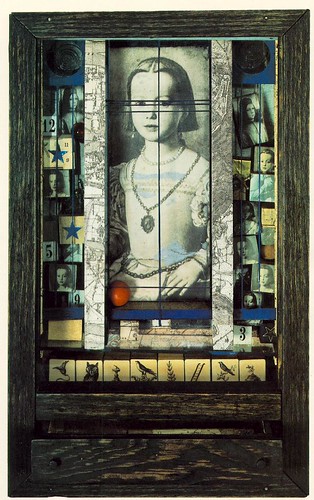
Additive process-constructing by assembling different materials together to create a new artwork that is different from what is was before. It consists of two different methods, one is assembling and the other one is modeling.


Here is an example of assemblage by Joseph Cornell. He made this by using different objects,which were originally created for another purpose, and resemble them together to have the feeling of fullness.


This is another example of additive process. It is also an example of modeling method, it is usually used in ceramic.


Line

Line is basically a connection between two points. There are multiple forms that a line can come in; horizontal, vertical, diagonal, and curved. Horizontal lines can help visual stability in the artwork when vertical lines can accentuate the height of an object or the elegance of the subject matter. Diagonal lines can imply movement and direct the eye. Curved lines tend to catch the eye and move it in a natural flowing motion where jagged lines can create quick, intense movements. An example of natural curved lines would be Gebruder Thonet’s rocking chair. He uses curved lines to give off a more natural, comfortable look and feel.


An example of jagged, diagonal lines would be aakash nihalani stairs. This piece of street art was completed with tape, formed on a 2 dimentional object to create a 3 dimentional feel.



Unity and Variety

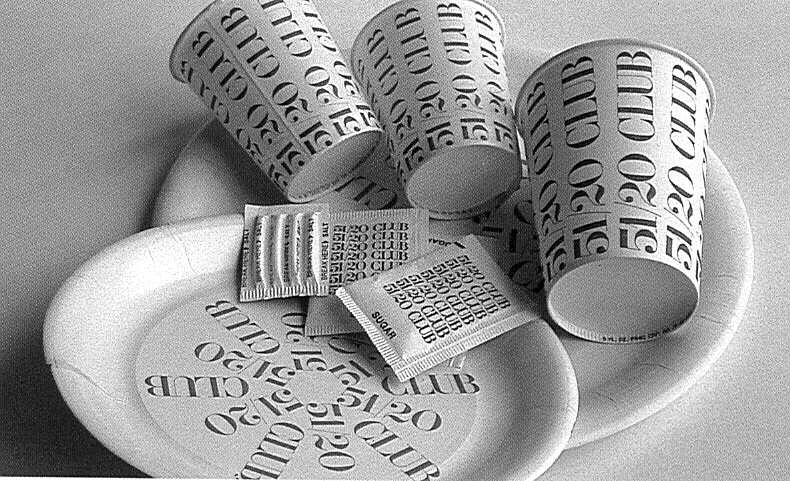
Unity is when elements of a composition form a sense of togetherness.

Variety is when several different elements are introduced to break unity within a composition; diversity.


Example of Unity: All objects in the composition are linked by the phrase "51/20 CLUB"


Example of Variety: The portrait is in black and white, but random swirls of colours are involved.

Form

Form is an artists manifestation of shape in a three dimensional space.


Form must have a pertinent function to be considered aesthetically or materialistically valuable.


In the case of a fork, the form must be functional, yet visually compelling, and ergonomicaly pleasing to satisfy a consumer.


This war memorial utilizes form for a different purpose and it's output has a different effect on the audience. It's historical significance outweighs it's functionality, and therefore it's form is more suitable in this context.


Connections

Connections
- There are two forms of connections that are equally important to design.
They are: Physical and Visual connections.

1. Physical Connections- This type of connection is based on how the materials are physically attached to one another. Physical connections are very important in the designs of functional objects. For example, carpenters employing different types of joint forms when attaching wood.

Example: Lap joints

2. Visual Connections- This type of connection is is purely based on how one views a composition. Objects or parts within the composition do not have to physically connected but can be linked by simple things such as color or ideals.

Example :Metal cups


Section

Section, an instance of cutting; separation by cutting, is used when a slice of the object must be shown. Dashed lines are used to indicate the outlines of shapes that are invisible from a given viewpoint.

Example :


The picture in the bottom right.